Plants are often associated with beauty, oxygen, and life, but some species contain deadly toxins capable of causing severe illness or even death. Scientists studying the deadliest plants in the world have discovered that many plants evolved poisonous chemicals as defense mechanisms against predators and environmental threats. While some dangerous species are well-known, others appear harmless despite containing extremely toxic compounds hidden in their leaves, seeds, flowers, or sap.
The study of toxic plants has become an important field in botany, medicine, and environmental science. Many poisonous plants have shaped history through accidental poisonings, medicinal discoveries, and even criminal use. Researchers investigating dangerous nature continue uncovering how these plants produce toxins and how humans and animals interact with them. Understanding the risks associated with poisonous vegetation is important because many deadly plants grow in gardens, forests, and natural environments around the world.
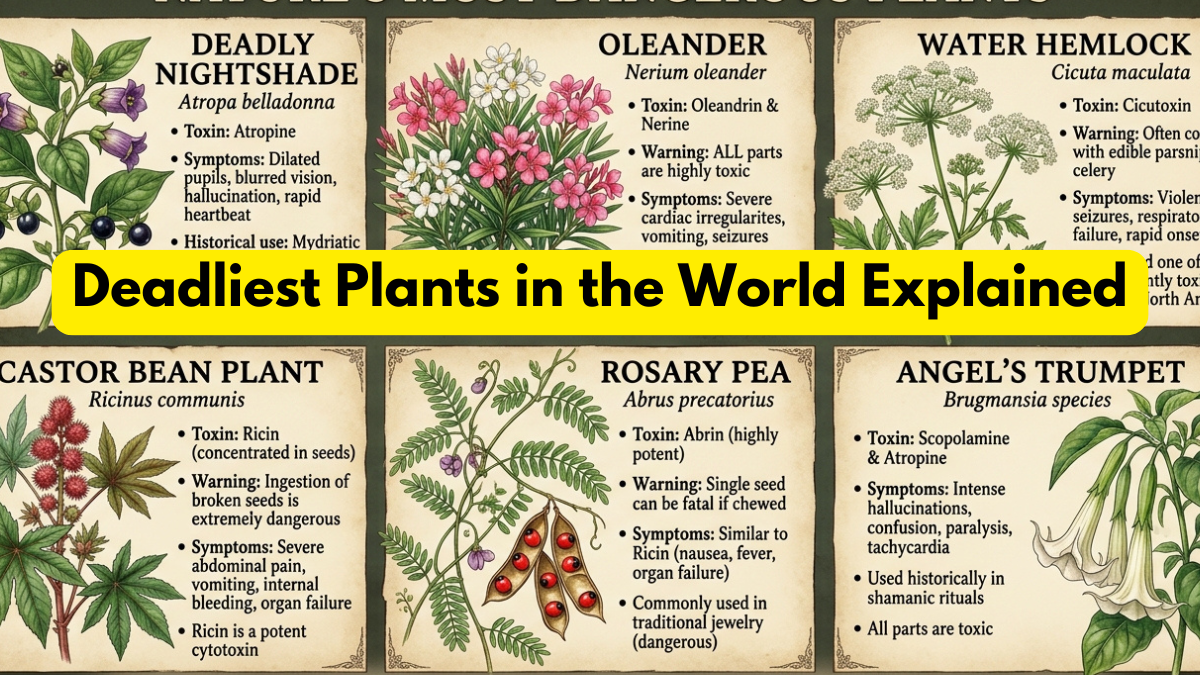
Why Some Plants Become Toxic
One major reason behind the existence of the deadliest plants in the world is survival. Plants cannot run away from predators, so many evolved chemical defenses to discourage animals and insects from eating them.
Scientists studying toxic plants explain that these poisons can affect the nervous system, heart, digestive organs, or skin depending on the plant species. Some toxins act slowly, while others can cause symptoms within minutes.
Common plant defense toxins include:
- Alkaloids
- Glycosides
- Oxalates
- Neurotoxins
- Cardiac toxins
These substances make poisonous vegetation an important part of dangerous nature and evolutionary biology. In some cases, even touching certain plants can cause severe reactions.
The Most Dangerous Plants Found Worldwide
Several species are considered among the deadliest plants in the world because of their extreme toxicity and history of human poisoning. Some plants contain poisons so strong that even tiny amounts may become fatal.
Here is a table showing some famous poisonous plants and their dangers:
| Plant Name | Toxic Part | Main Danger |
|---|---|---|
| Oleander | Entire plant | Heart failure |
| Deadly Nightshade | Berries and leaves | Paralysis and hallucinations |
| Castor Bean Plant | Seeds | Organ failure from ricin toxin |
| Water Hemlock | Roots | Violent seizures |
| Monkshood | Roots and flowers | Heart and nerve poisoning |
These highly toxic plants demonstrate how deadly certain forms of vegetation can become. Researchers studying dangerous nature warn that many poisonous species are visually attractive and may grow in common environments.
How Plant Poisons Affect the Human Body
The toxins found in the deadliest plants in the world work in different ways depending on chemical composition. Some attack the nervous system, while others damage organs or interrupt heart function.
For example, ricin from castor beans is one of the most powerful natural toxins known. Even small doses can cause severe internal damage. Water hemlock contains toxins that rapidly affect the brain and nervous system, often causing seizures.
Scientists studying toxic plants classify plant poisons into several major categories:
- Neurotoxins affecting nerves and brain
- Cardiotoxins disrupting heart function
- Gastrointestinal toxins causing severe illness
- Skin irritants producing burns or rashes
- Respiratory toxins affecting breathing
The wide variety of effects highlights the complexity of dangerous nature and why poisonous plants continue attracting scientific interest.
Deadly Plants Used in History and Medicine
Throughout history, many species from the deadliest plants in the world have played important roles in medicine, warfare, and folklore. Ancient civilizations sometimes used plant toxins in hunting weapons or political assassinations.
For example, hemlock became famous after being used in the execution of the Greek philosopher Socrates. Monkshood toxins were once applied to arrows during hunting and warfare in parts of Asia and Europe.
Interestingly, some toxic plants also contributed to modern medicine. Scientists discovered that controlled doses of certain plant compounds could help treat diseases when carefully processed.
Examples of medical uses include:
- Digitalis from foxglove for heart conditions
- Atropine from deadly nightshade
- Pain-relieving alkaloids from opium poppies
- Cancer research involving plant toxins
These discoveries demonstrate how dangerous nature can sometimes provide important medical benefits when studied responsibly.
Poisonous Plants Found in Everyday Environments
Many people are surprised to learn that some of the deadliest plants in the world can be found in gardens, parks, or household landscapes. Oleander, for example, is a popular ornamental plant despite being highly poisonous.
Researchers studying toxic plants warn that children and pets face increased risks because some poisonous plants produce colorful berries or attractive flowers. Even smoke from burning certain plants may contain dangerous chemicals.
Common toxic plants found around homes include:
- Oleander
- Foxglove
- Lily of the valley
- Daffodils
- Dieffenbachia
Understanding these risks is an important part of recognizing the hidden side of dangerous nature in everyday life.
How Animals Avoid Toxic Plants
Many animals instinctively avoid consuming the deadliest plants in the world, but not all species respond the same way. Some animals evolved resistance to toxins that would harm humans or other creatures.
Goats, insects, and certain birds can sometimes consume specific toxic plants without serious effects. Scientists studying animal behavior believe some species learned through evolution and environmental experience which plants are dangerous.
Some animal survival strategies include:
- Avoiding bitter-tasting plants
- Learning through trial and error
- Developing toxin resistance
- Eating clay or minerals to neutralize toxins
These adaptations demonstrate another fascinating aspect of dangerous nature and ecological balance.
Why Scientists Continue Studying Toxic Plants
Research involving the deadliest plants in the world continues expanding because plant toxins may provide valuable insights into medicine, agriculture, and biochemistry.
Scientists studying toxic plants hope to develop new pharmaceuticals, safer pesticides, and improved treatments for poisoning cases. Some plant toxins are also being investigated for possible cancer therapies and neurological research.
Modern laboratories analyze plant chemicals to understand:
- How toxins evolve
- How plants defend themselves
- Medical applications of plant compounds
- Environmental interactions
- Human poisoning prevention
The study of dangerous nature therefore remains highly important across multiple scientific fields.
How to Stay Safe Around Poisonous Plants
Avoiding accidental poisoning from the deadliest plants in the world requires awareness and caution. Experts recommend never eating unfamiliar plants and teaching children to avoid touching unknown vegetation.
Basic safety precautions include:
- Wearing gloves while gardening
- Keeping toxic plants away from pets
- Learning to identify dangerous species
- Avoiding unknown berries or leaves
- Seeking medical help immediately after suspected poisoning
Scientists studying toxic plants emphasize that education is one of the best defenses against accidental exposure.
Conclusion
The fascinating world of the deadliest plants in the world reveals how nature can be both beautiful and extremely dangerous. Through powerful toxins and chemical defenses, many plants evolved extraordinary survival mechanisms that can seriously harm humans and animals.
Research into toxic plants continues helping scientists better understand medicine, ecology, and evolutionary biology. At the same time, these species serve as important reminders of the hidden dangers that exist within dangerous nature.
As scientific knowledge grows, understanding poisonous plants becomes increasingly valuable for public safety, environmental awareness, and future medical discoveries.
FAQs
What is the deadliest plant in the world?
Many experts consider water hemlock among the deadliest plants because of its extremely toxic effects on the nervous system.
Can touching toxic plants be dangerous?
Yes, some toxic plants can cause skin irritation, burns, or allergic reactions through direct contact.
Why do plants produce toxins?
Plants produce toxins mainly as defense mechanisms against predators, insects, and environmental threats.
Are poisonous plants ever used in medicine?
Yes, some poisonous plants contain compounds used in carefully controlled medical treatments and pharmaceutical research.
What should someone do after plant poisoning?
Anyone suspected of plant poisoning should seek immediate medical attention and avoid attempting home remedies without professional guidance.
Click here to learn more