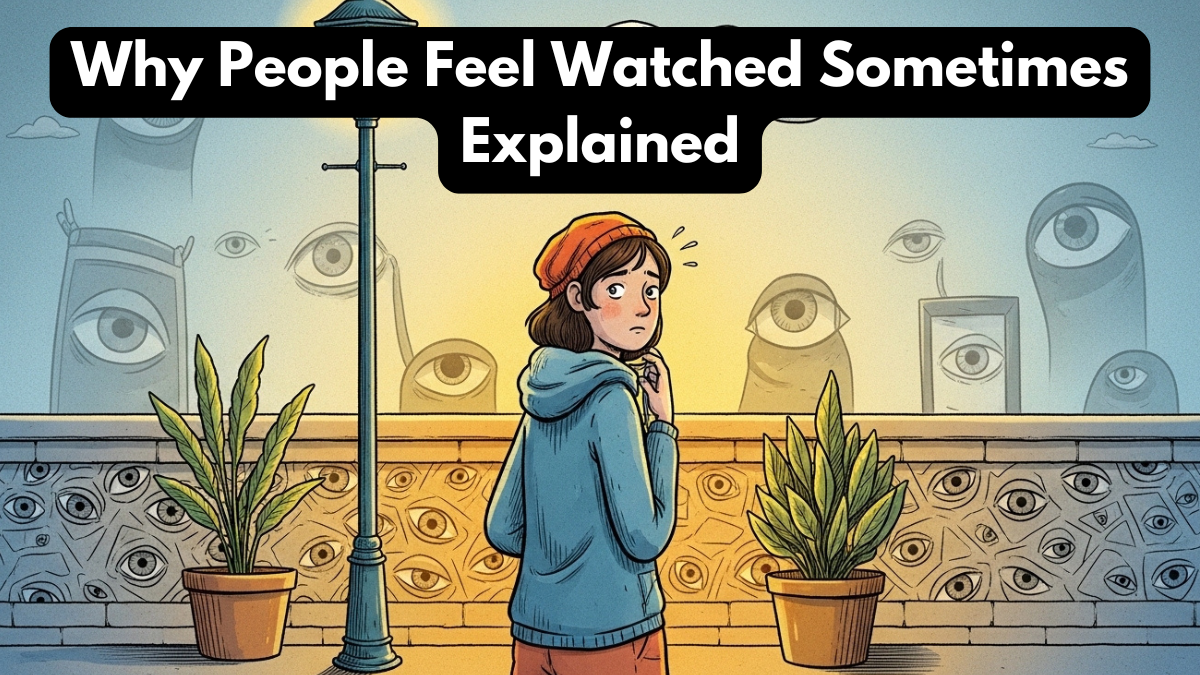
Have you ever had the strange sensation that someone is watching you, even when no one is around? This feeling can occur in everyday situations—walking alone at night, sitting in a quiet room, or even while working. Many people wonder why people feel watched sometimes, and the answer lies in how the human brain is wired for survival and awareness.
This experience is not necessarily a sign of danger or imagination. Instead, it is linked to an awareness illusion, where the brain interprets subtle cues as potential threats. The body’s natural brain response is designed to detect even the slightest signs of being observed. While this ability helped humans survive in the past, it can still trigger sensations today, even when there is no real threat present.
The Brain’s Survival Mechanism
One of the main reasons why people feel watched sometimes is the brain’s built-in survival system. Humans evolved in environments where being aware of predators or threats was essential. As a result, the brain developed the ability to constantly scan surroundings.
This scanning process is part of the brain response, which remains active even in safe environments. When the brain detects something unusual—like a sound, movement, or even silence—it may interpret it as a potential sign of observation.
Key survival-related triggers include:
- Sudden changes in the environment
- Unfamiliar sounds or movements
- Lack of visual clarity (e.g., darkness)
- Being alone in unfamiliar spaces
These triggers can create an awareness illusion, leading to the feeling that someone is watching, even when no one is present.
Understanding the Awareness Illusion
The concept of awareness illusion is central to explaining why people feel watched sometimes. This illusion occurs when the brain misinterprets normal sensory input as a sign of attention from others.
For example, a small movement in your peripheral vision or a faint sound can activate the brain’s alert system. Even if the source is harmless, the brain may still react as if there is a potential observer.
This happens because the brain response prioritizes safety over accuracy. It is better for the brain to assume a possible threat than to ignore it completely.
Here is a comparison to understand this better:
| Situation Type | Brain Interpretation | Resulting Feeling |
|---|---|---|
| Clear environment | No threat detected | Calm and relaxed |
| Unfamiliar setting | Possible threat | Slight alertness |
| Low visibility | Increased uncertainty | Feeling watched |
| Sudden noise | Potential danger | Heightened awareness |
| Isolation | Lack of confirmation | Awareness illusion triggered |
This table shows how the brain response can create an awareness illusion, explaining why people feel watched sometimes.
The Role of Peripheral Vision
Peripheral vision plays an important role in why people feel watched sometimes. The edges of our vision are less detailed but more sensitive to movement. This makes it easier for the brain to detect motion, but it also increases the chances of misinterpretation.
When something moves slightly in your peripheral vision, the brain may interpret it as a person or presence. This triggers the brain response, even if the movement is caused by something harmless like a shadow or object.
This misinterpretation contributes to the awareness illusion, reinforcing the sensation of being watched.
Psychological and Emotional Factors
Emotions and mental state also influence why people feel watched sometimes. Anxiety, stress, or fatigue can make the brain more sensitive to perceived threats. In such states, the brain response becomes more reactive, increasing the likelihood of false alarms.
Psychological factors include:
- Anxiety heightening awareness
- Fear amplifying minor stimuli
- Stress reducing logical interpretation
- Imagination filling in missing details
These factors strengthen the awareness illusion, making the feeling of being watched more intense and frequent.
Environmental Influence on Perception
The environment plays a significant role in why people feel watched sometimes. Certain settings naturally increase uncertainty and alertness, such as dark rooms, quiet spaces, or unfamiliar locations.
In these situations, the brain lacks enough information to confirm safety. This uncertainty triggers the brain response, leading to heightened awareness. The awareness illusion becomes stronger as the brain tries to make sense of incomplete information.
Examples include:
- Walking alone at night
- Sitting in a silent room
- Being in a new or unfamiliar place
- Experiencing sudden environmental changes
These conditions create the perfect environment for the brain to misinterpret signals.
Why This Feeling Feels So Real
The feeling of being watched can be very convincing because it is driven by instinct. The brain response is fast and automatic, making it difficult to distinguish between real and perceived threats.
The awareness illusion works by amplifying subtle cues, making them seem significant. Even when there is no actual observer, the brain creates a strong sense of presence.
This explains why people feel watched sometimes, as the brain prioritizes safety and awareness over certainty.
The Balance Between Awareness and Reality
While this sensation can feel unsettling, it is actually a sign that the brain is functioning as intended. The ability to detect potential threats is an important survival skill.
However, in modern environments, this system can sometimes misfire, creating unnecessary alerts. Understanding why people feel watched sometimes helps reduce fear and allows us to recognize the role of awareness illusion and brain response in shaping our perception.
Conclusion
In conclusion, the reason why people feel watched sometimes is rooted in the brain’s natural survival mechanisms. Through the effects of awareness illusion and rapid brain response, the mind interprets subtle cues as signs of observation.
While this feeling may seem strange, it is a normal part of human perception. By understanding how the brain processes information, we can better manage these sensations and appreciate the complex ways in which our mind keeps us alert and aware.
FAQs
Why do I feel like someone is watching me when I’m alone?
This happens due to an awareness illusion, where the brain misinterprets environmental cues.
Is this feeling normal?
Yes, it is a natural brain response linked to survival instincts.
Does anxiety make this feeling stronger?
Yes, anxiety can heighten sensitivity and increase the likelihood of feeling watched.
Can this happen in safe environments?
Yes, even safe environments can trigger the illusion if the brain detects uncertainty.
How can I reduce this feeling?
Improving lighting, reducing stress, and staying aware of your surroundings can help manage the brain response.
Click here to learn more