Long before the Silk Road became one of history’s most famous commercial networks, civilizations across the world had already established complex trading connections. The story of ancient trade routes before Silk Road development reveals how early societies exchanged goods, culture, technology, and ideas across vast distances. These routes connected kingdoms, deserts, rivers, mountains, and coastlines, helping shape the foundations of the global economy thousands of years ago.
The growth of early trade systems played a major role in the rise of ancient civilizations. Through trade, communities gained access to valuable resources they could not produce locally, including metals, spices, textiles, precious stones, and food products. These exchanges strengthened political alliances, encouraged exploration, and supported the expansion of cities and empires. The influence of the ancient economy can still be seen in modern commercial systems and international trade practices.
Historians continue studying the ancient trade routes before Silk Road expansion because they demonstrate how interconnected the ancient world truly was. Despite lacking modern transportation, ancient merchants managed to create sophisticated trade networks that stretched across continents and seas.
The Origins of Early Trade Systems
The development of early trade systems began when ancient communities realized they could exchange surplus goods for resources they lacked. Farming villages traded crops for tools, pottery, salt, and animal products. Over time, these local exchanges expanded into regional and international trade routes.
The earliest examples of ancient trade routes before Silk Road networks appeared in Mesopotamia, Egypt, the Indus Valley, and surrounding regions. Rivers such as the Nile, Tigris, and Euphrates became natural transportation corridors that allowed merchants to move goods efficiently.
As civilizations expanded, the ancient economy became more organized. Markets emerged in growing cities, and rulers began taxing trade activities. Some ancient states even built roads, ports, and storage centers to support commercial movement.
Important goods traded through early routes included:
- Gold and silver
- Copper and tin
- Spices and incense
- Grain and olive oil
- Silk and textiles
- Precious stones
- Pottery and ceramics
These exchanges allowed civilizations to grow wealthier while spreading new ideas, languages, and technologies across distant regions.
Major Ancient Trade Routes Before the Silk Road
Several major commercial networks existed centuries before the Silk Road gained prominence. These routes connected Africa, Asia, Europe, and the Middle East through land and maritime trade systems.
| Trade Route | Region | Main Goods Traded | Historical Importance |
|---|---|---|---|
| Incense Route | Arabia to Mediterranean | Frankincense, myrrh | Religious and luxury trade |
| Amber Road | Europe | Amber, metals | Connected northern Europe |
| Nile Trade Network | Egypt and Africa | Gold, grain, papyrus | Supported Egyptian economy |
| Indus-Mesopotamian Trade | South Asia and Mesopotamia | Cotton, beads, metals | Early international commerce |
| Mediterranean Sea Routes | Europe and North Africa | Wine, olive oil, ceramics | Cultural and economic exchange |
These ancient trade routes before Silk Road expansion helped civilizations establish long-distance commercial relationships. The movement of goods also encouraged diplomatic cooperation and cultural interaction between distant societies.
The Incense Route, for example, became extremely profitable because frankincense and myrrh were highly valued in religious ceremonies. Similarly, the Amber Road connected northern Europe with Mediterranean civilizations, contributing to the growth of the ancient economy across multiple regions.
How Ancient Merchants Traveled and Traded
Merchants involved in early trade systems faced many dangers during their journeys. Travel across deserts, mountains, forests, and seas was risky and time-consuming. Despite these challenges, traders continued exploring new routes to expand commercial opportunities.
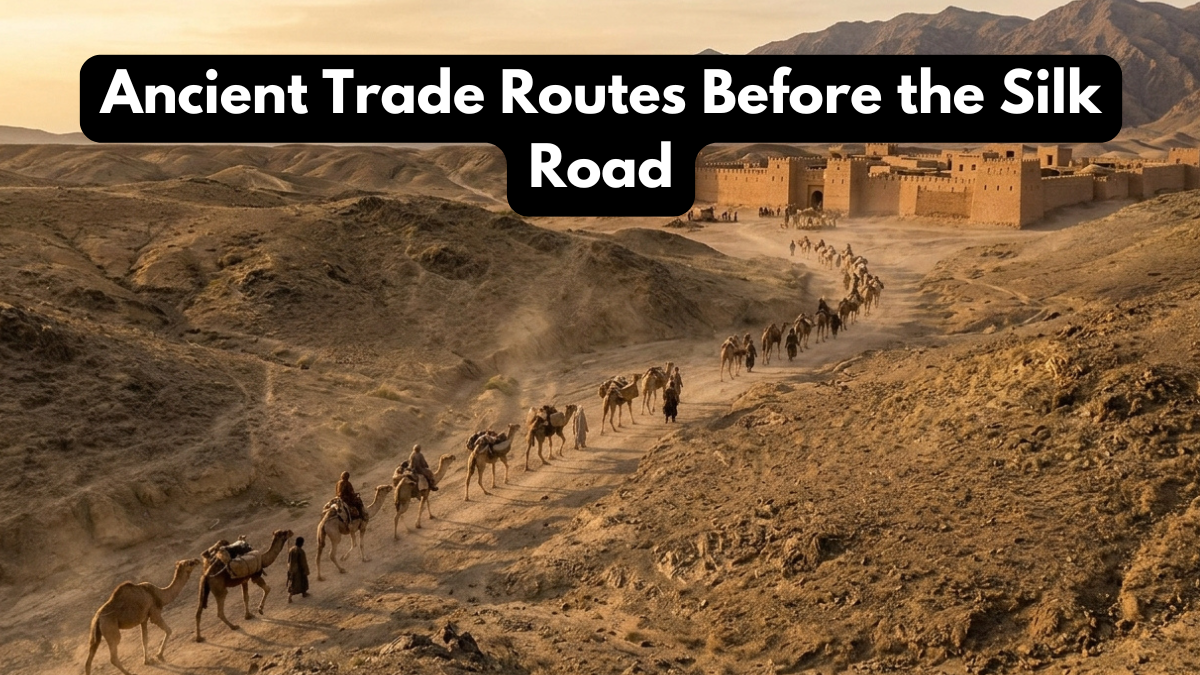
Land caravans often used camels, donkeys, and horses to transport goods across difficult terrain. Maritime traders relied on ships powered by sails and rowing systems. Ports and caravan cities became important centers of commerce along the ancient trade routes before Silk Road development.
Ancient merchants also developed methods for communication, negotiation, and record-keeping. Some civilizations created early forms of currency and standardized weights to simplify trade transactions. These innovations strengthened the ancient economy and improved commercial efficiency.
Several challenges faced by ancient traders included:
- Harsh weather conditions
- Bandit attacks
- Political conflicts
- Dangerous sea voyages
- Language barriers
- Limited navigation tools
Despite these obstacles, ancient trade networks continued expanding because trade brought wealth, political influence, and access to valuable resources.
Cultural Exchange Through Ancient Trade
The impact of ancient trade routes before Silk Road expansion extended far beyond economics. Trade routes also became pathways for cultural exchange, spreading ideas, religions, languages, inventions, and artistic traditions between civilizations.
Through early trade systems, ancient societies shared technologies such as metalworking, agriculture, writing systems, and shipbuilding techniques. Religious beliefs and philosophical ideas also spread along commercial routes. For example, merchants helped introduce cultural influences between Egypt, Mesopotamia, India, and the Mediterranean world.
The ancient economy encouraged urban growth as cities became centers of trade and cultural interaction. Marketplaces attracted merchants, travelers, scholars, and artisans from different regions, creating diverse and multicultural environments.
Trade also influenced architecture, fashion, and food traditions. Imported goods became symbols of wealth and prestige among ruling classes. Luxury items such as spices, perfumes, and fine textiles gained popularity in distant regions through commercial exchange.
The cultural impact of these ancient networks demonstrates that civilizations were far more connected than many people realize today.
The Decline and Evolution of Early Trade Routes
Many ancient trade routes before Silk Road networks eventually declined due to wars, environmental changes, political instability, and shifting economic conditions. Empires rose and fell, altering the safety and accessibility of trade corridors.
However, many older routes later became part of larger systems such as the Silk Road. Ancient roads, caravan paths, and maritime routes continued evolving as new civilizations expanded commercial activities.
The development of improved ships, navigation methods, and infrastructure strengthened international commerce over time. These advancements helped transform regional early trade systems into broader global trading networks.
Historians study the ancient economy to understand how trade influenced political power, technological progress, and social development. Ancient trade routes also provide valuable insight into migration patterns and the spread of civilizations.
Archaeological discoveries continue uncovering evidence of ancient trade activities, including coins, shipwrecks, pottery, and merchant records. These findings help researchers reconstruct the history of global commerce before the rise of the Silk Road.
Conclusion
The history of ancient trade routes before Silk Road expansion reveals how deeply interconnected ancient civilizations truly were. Through sophisticated early trade systems, merchants exchanged goods, ideas, technologies, and cultural traditions across vast distances long before modern transportation existed.
These trade networks played a critical role in shaping the ancient economy, supporting urban growth, political power, and cultural exchange. Ancient traders overcame dangerous journeys and difficult conditions to build commercial systems that influenced the development of civilizations across the world.
Today, the study of these ancient routes continues to provide valuable insights into human history, economic development, and cultural interaction. The legacy of the ancient trade routes before Silk Road networks remains visible in modern global trade and international connections.
FAQs
What were ancient trade routes before the Silk Road?
They were early commercial networks that connected civilizations through land and sea trade long before the Silk Road became famous.
Why were early trade systems important?
Early trade systems allowed civilizations to exchange resources, technologies, ideas, and cultural traditions.
What goods were traded in the ancient economy?
Ancient merchants traded metals, spices, textiles, grain, incense, pottery, and precious stones.
How did merchants travel on ancient trade routes?
Merchants traveled using caravans, ships, camels, horses, and river transportation systems.
Did ancient trade routes influence culture?
Yes, trade routes helped spread languages, religions, inventions, artistic styles, and cultural traditions between civilizations.
Click here to learn more