Electric air taxis are rapidly moving from futuristic concepts to real-world transportation solutions in 2026. As cities struggle with traffic congestion, pollution, and inefficient commuting systems, electric air taxis are emerging as a practical alternative for short-distance urban travel. These aircraft, often described as flying taxis, operate using electric propulsion and vertical takeoff and landing technology, allowing them to bypass crowded roads entirely. By redefining urban mobility, electric air taxis promise faster travel times, reduced environmental impact, and a new dimension of transportation infrastructure designed for densely populated cities.
What Are Electric Air Taxis and How Do They Operate?
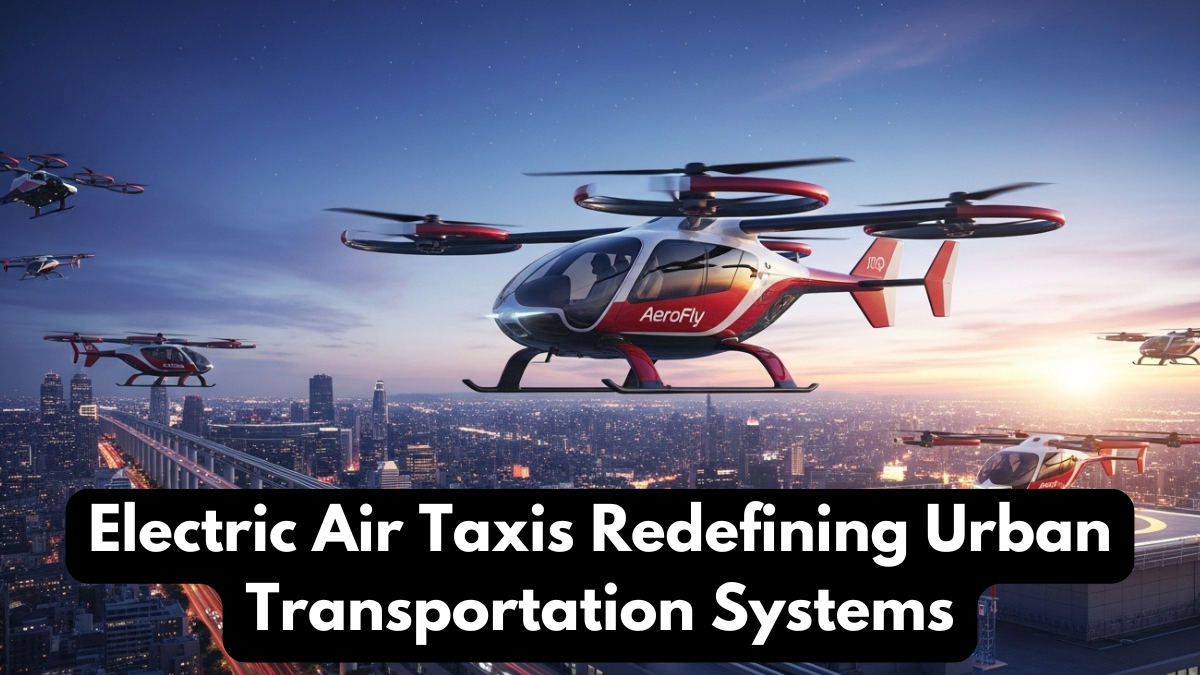
Electric air taxis are lightweight, electric-powered aircraft designed to transport passengers across short urban and suburban distances. Unlike traditional helicopters, they are quieter, more energy-efficient, and rely on multiple rotors for enhanced safety. Most flying taxis use advanced battery systems and autonomous or semi-autonomous navigation supported by AI. Their ability to take off and land vertically allows seamless integration into existing city environments through designated rooftops and landing hubs. As a result, urban mobility systems are expanding upward, creating three-dimensional transportation networks above city streets.
The Role of Flying Taxis in Solving Urban Mobility Challenges
Traffic congestion costs cities billions of dollars annually in lost productivity and fuel consumption. Flying taxis address this issue by shifting a portion of urban travel to the air. By reducing reliance on ground-based transport, electric air taxis help cities optimize transportation flow while minimizing infrastructure strain. In emergency scenarios, these vehicles can also support medical transport and disaster response. As urban mobility demands continue to grow, flying taxis offer a scalable solution that complements public transit rather than replacing it.
Environmental and Economic Benefits of Electric Air Taxis
Sustainability is a key driver behind the adoption of electric air taxis. Powered by electricity, these vehicles produce zero direct emissions, making them cleaner alternatives to fossil-fuel-based transport. Reduced noise pollution also improves quality of life in urban areas. Economically, flying taxis create new industries around manufacturing, maintenance, and digital traffic management. Over time, increased adoption is expected to lower operating costs, making urban mobility more affordable and accessible to a wider population.
Key Components Enabling Electric Air Taxi Ecosystems
The table below outlines the essential elements supporting the growth of electric air taxis:
| Component | Function | Impact on Urban Mobility |
|---|---|---|
| Electric Propulsion Systems | Provides clean and efficient power | Reduces emissions and noise |
| VTOL Technology | Enables vertical takeoff and landing | Eliminates need for runways |
| Autonomous Navigation | Enhances flight safety and efficiency | Supports scalable flying taxis |
| Urban Air Traffic Management | Coordinates airspace usage | Prevents congestion in the sky |
| Charging Infrastructure | Supports rapid energy replenishment | Ensures operational reliability |
These components collectively enable electric air taxis to function safely and efficiently within complex urban mobility environments.
Challenges, Regulation, and Public Acceptance
Despite their potential, electric air taxis face challenges related to regulation, infrastructure, and public trust. Aviation authorities are developing certification standards to ensure safety and reliability. Cities must invest in landing hubs and air traffic systems to support flying taxis at scale. Public acceptance is another key factor, as passengers must feel confident in autonomous flight systems. Addressing these concerns through transparent regulation and education is essential for widespread adoption of electric air taxis within urban mobility networks.
Conclusion: A New Era of Urban Transportation
Electric air taxis represent a transformative shift in how cities approach transportation. By integrating electric air taxis into broader urban mobility strategies, cities can reduce congestion, lower emissions, and improve travel efficiency. As flying taxis become more common in 2026 and beyond, they will redefine commuting, reshape city planning, and open new possibilities for sustainable, connected urban living.
FAQs
What are electric air taxis?
Electric air taxis are electric-powered aircraft designed for short-distance passenger travel within urban and suburban areas.
How do flying taxis improve urban mobility?
Flying taxis reduce road congestion by moving a portion of travel into the air, making transportation faster and more efficient.
Are electric air taxis environmentally friendly?
Yes, electric air taxis produce zero direct emissions and significantly less noise compared to traditional aircraft.
When will electric air taxis become widely available?
Widespread adoption depends on regulatory approval, infrastructure development, and public acceptance, with major rollouts expected later this decade.
Are electric air taxis safe for passengers?
Safety is a top priority, with rigorous testing, redundant systems, and regulatory oversight guiding the deployment of electric air taxis.
Click here to learn more