Rising electricity costs, frequent power shortages, and growing environmental concerns have pushed many homeowners to rethink how they consume energy. Instead of depending entirely on centralized power systems, people are now turning toward DIY energy projects as a practical and empowering solution. These projects allow individuals to take control of their energy usage while actively contributing to home sustainability. What once required heavy investment and professional systems is now accessible through simple tools, creative planning, and basic technical awareness. From small solar setups to homemade insulation upgrades, DIY home energy solutions are quickly becoming a movement of independence, savings, and environmental responsibility.
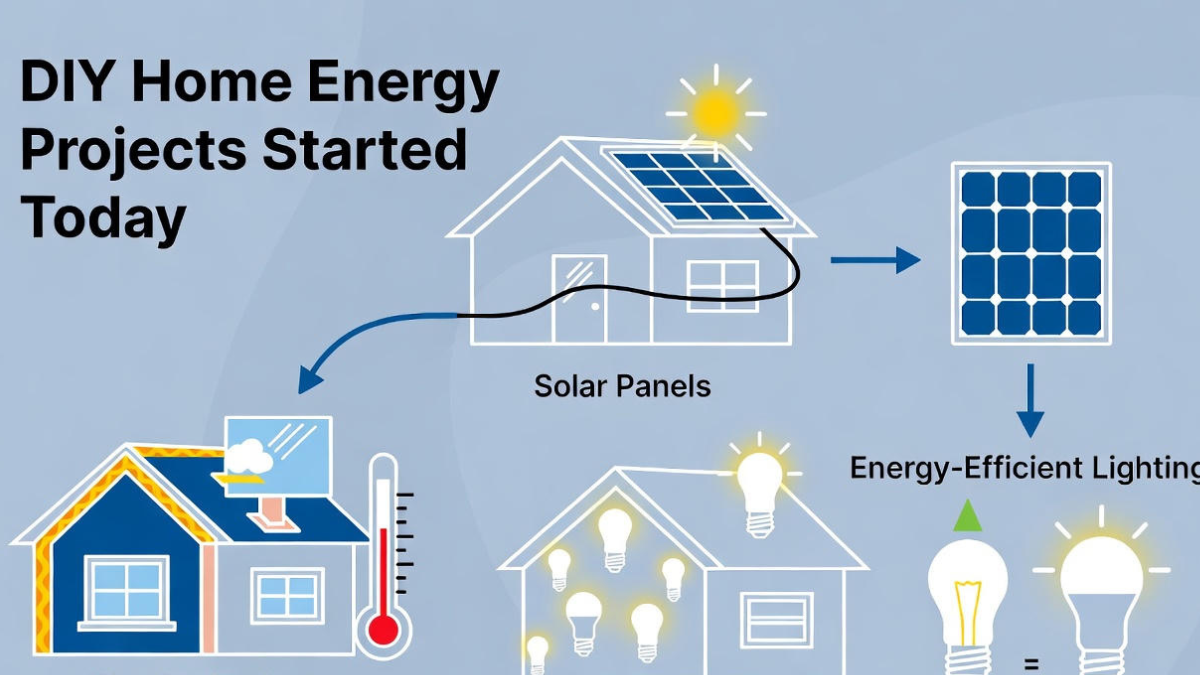
Why DIY Energy Projects Are Becoming Popular
The rising demand for DIY energy projects is driven by three powerful forces: cost savings, environmental awareness, and personal empowerment. Electricity bills are skyrocketing across cities, making energy efficiency a financial necessity rather than a luxury. At the same time, climate change awareness has pushed people to explore cleaner alternatives. home sustainability is no longer just a trend—it has become a lifestyle goal rooted in survival, responsibility, and future security.
Unlike large-scale energy systems that require expensive installations and government approvals, DIY energy projects offer flexibility. Homeowners can begin with small upgrades without full system overhauls. This step-by-step approach makes home sustainability practical for apartments, rental homes, and even temporary living spaces. The sense of independence people gain from producing or conserving even a small portion of their own energy is a powerful motivator behind the growth of DIY energy projects worldwide.
Simple DIY Energy Projects Anyone Can Start
One of the most attractive features of DIY energy projects is that many of them require little technical knowledge. With proper guidance, people can begin improving home sustainability within days rather than months. Some popular beginner-friendly projects include:
- DIY solar phone chargers using small panels
- Homemade solar heaters for water or air
- Smart power strip systems to reduce phantom load
- DIY insulation sealing for doors and windows
- Rainwater-powered micro turbines for garden lighting
Each of these projects reduces power consumption while strengthening home sustainability in measurable ways. Most of them rely on recycled materials, affordable kits, or simple electrical components, making DIY energy projects accessible even to people with limited resources. As confidence grows, homeowners often expand into more advanced energy experiments.
Comparing DIY Energy Projects With Traditional Energy Systems
To understand why DIY energy projects are gaining serious attention, it helps to compare them with traditional home energy systems:
| Feature | Traditional Energy Systems | DIY Energy Projects | Impact on Home Sustainability |
|---|---|---|---|
| Installation cost | High | Low to moderate | Strong long-term benefit |
| Maintenance dependence | Professional services | Self-managed | High control |
| Environmental impact | Medium to high | Very low | Extremely positive |
| Skill requirement | Technical experts required | Beginner-friendly | Broad accessibility |
| Flexibility and scalability | Limited | Highly flexible | Excellent for home sustainability |
This comparison clearly shows why DIY energy projects have become central to the future of home sustainability. They democratize energy control, reduce reliance on external infrastructure, and allow gradual, realistic transitions toward greener living.
How DIY Energy Projects Strengthen Home Sustainability
Every time a household adopts even a small DIY energy project, it strengthens its foundation of home sustainability. Energy production becomes localized. Power losses during transmission are eliminated. Carbon footprints shrink naturally without forcing major lifestyle sacrifices. Instead of reacting to energy crises, homeowners become proactive participants in the sustainability process.
DIY energy projects also promote behavioral change. Once people become involved in generating or conserving energy themselves, they become more mindful of usage habits. Lights are turned off consciously, appliances are chosen for efficiency, and energy waste becomes emotionally unacceptable. This psychological shift is one of the strongest drivers behind home sustainability because it transforms sustainability from an idea into daily action.
Children raised around DIY energy projects develop environmental awareness from an early age. They learn that electricity does not magically appear—it is produced, conserved, and respected. This generational effect ensures that home sustainability evolves from short-term behavior into long-term cultural practice.
Financial Benefits and Long-Term Savings
One of the most underestimated advantages of DIY energy projects is long-term financial stability. Even small projects like improved insulation or solar-powered outdoor lighting significantly reduce monthly electricity bills. Over time, these savings accumulate and can fully recover the initial investment. In contrast to rising energy tariffs, home sustainability offers predictable financial relief through reduced dependence on grid systems.
DIY energy projects also increase property value. Homes equipped with renewable energy systems, energy-saving upgrades, and sustainable infrastructure are more attractive to buyers. Real estate markets increasingly favor properties built around home sustainability, making energy-efficient DIY improvements a strategic investment rather than a mere cost-saving tactic.
In rural and semi-urban areas where power supply is unstable, DIY energy projects become critical tools for survival. Solar battery systems, backup generators powered by sustainable sources, and energy-efficient storage systems offer uninterrupted power for education, healthcare, and productivity. In such cases, home sustainability directly supports quality of life.
Challenges in DIY Energy Projects and How to Overcome Them
Despite their benefits, DIY energy projects are not without challenges. Initial lack of technical confidence, fear of electrical risk, inconsistent weather-dependent energy sources, and limited storage capacity often discourage beginners. However, modern technology has significantly reduced these barriers. Step-by-step guides, community workshops, online tutorials, and beginner safety kits have made DIY energy projects far more approachable than in the past.
The key to success lies in starting small. Rather than attempting full-scale solar systems immediately, individuals should focus on improving home sustainability through manageable upgrades. Once experience builds, more advanced projects become both safer and more efficient. Another important factor is consistency. Sustainability is not achieved overnight—it is built through repeated effort and gradual improvement.
The Future of DIY Energy Projects and Home Sustainability
The future of DIY energy projects looks stronger than ever. As technology becomes cheaper and more efficient, everyday households will gain access to tools that were once limited to industrial setups. Micro solar grids, portable wind generators, graphene battery storage, and smart energy-monitoring apps will redefine home sustainability in the coming decade.
Governments and environmental organizations are also beginning to support DIY energy adoption through subsidies, training programs, and public awareness campaigns. This will further accelerate the integration of DIY energy projects into mainstream residential life. Instead of relying entirely on massive power plants, future cities may function through millions of small, interconnected sustainable energy units operating at the household level.
Conclusion
The rise of DIY energy projects marks a powerful shift toward self-reliance, environmental responsibility, and financial stability. By empowering homeowners to participate directly in energy production and conservation, these projects strengthen the foundation of true home sustainability. From lower electricity bills and reduced carbon footprints to increased energy security and environmental awareness, DIY energy solutions offer benefits that extend far beyond individual households. As the world moves toward sustainable living, DIY energy projects will no longer be optional experiments—they will become essential building blocks of resilient, future-ready homes.
FAQs
What are DIY energy projects?
DIY energy projects are small, self-installed energy production or energy-saving systems that allow individuals to generate or conserve power at home.
How do DIY energy projects support home sustainability?
They reduce dependence on external electricity, lower carbon emissions, conserve resources, and strengthen long-term home sustainability.
Are DIY energy projects expensive to start?
Most beginner projects are low-cost and can be expanded over time as savings accumulate and experience grows.
Are DIY energy projects safe for beginners?
Yes, with proper guidance, safety precautions, and beginner-friendly kits, most DIY energy projects are safe and effective.
Can DIY energy projects work in apartments?
Yes, small solar chargers, energy-efficient lighting, and insulation upgrades are ideal DIY energy projects for apartment living.
Click here to learn more