Volcanoes shape the surface of our planet in dramatic ways, yet some of their most important geological stories lie far beneath the waves. Thanks to advancements in deep-sea technology, scientists are now uncovering new details about Earth’s volcanic history using highly sensitive sediment scanners. These devices, capable of analyzing microscopic particles buried in ocean floors, are transforming our understanding of ancient eruptions, tectonic processes, and long-term climate interactions. As sediment scanners continue to evolve, they are helping researchers reconstruct events that predate written records, offering a richer, more accurate view of volcanic activity across time.
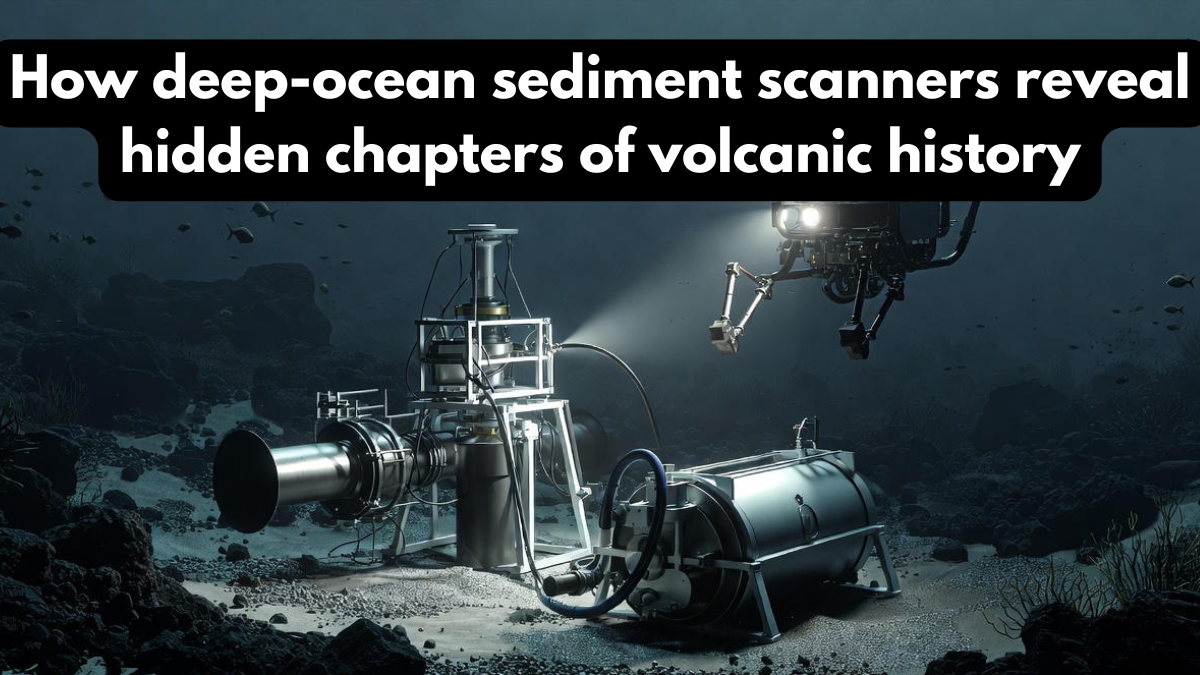
Exploring the Power of Deep-Sea Sediment Analysis
Layers of ocean sediment act as time capsules, storing ash deposits, chemical traces, and mineral signatures left behind by ancient volcanic eruptions. However, accessing these records has historically been difficult, requiring complex extraction and laboratory processing. Modern sediment scanners simplify this process by using acoustic imaging, spectrometry, and high-resolution mapping to identify volcanic signals directly on the seafloor. These technologies enable scientists to examine the spread and composition of ash layers with exceptional detail. This new approach brings clarity to previously ambiguous aspects of volcanic history, such as eruption magnitude, ash dispersal pathways, and eruption frequency.
How Sediment Scanners Reconstruct Ancient Volcanic Events
Unlike traditional sampling, sediment scanners provide continuous, non-destructive analysis of deep-sea layers. They detect variations in density, texture, and chemical composition, helping scientists identify layers formed during major volcanic eruptions. These layers reveal vital information about volcanic ash distribution, eruption timing, and environmental effects. By integrating scanner data with radiometric dating, researchers can build detailed timelines of volcanic history, tracing how eruptions influenced ocean circulation, global temperatures, and marine ecosystems. Sediment scanners even help locate underwater calderas and eruption sites that remain hidden beneath miles of seawater.
Advancing Climate and Geological Research
Understanding Earth’s volcanic history is essential for studying long-term climate patterns. Volcanic eruptions influence atmospheric chemistry, sunlight absorption, and global cooling or warming events. Sediment scanners provide crucial data that link underwater eruptions to historical climate fluctuations. For example, ash deposits found in deep-sea sediments can indicate when significant eruptions altered ocean temperatures or triggered biological shifts. This information enables scientists to refine climate models and anticipate how future volcanic activity might impact the planet. Additionally, sediment scanning enhances geological knowledge by offering clearer insights into plate tectonics, magma flow, and seismic risk zones.
Table: Contributions of Sediment Scanners to Volcanic Research
The table below highlights how sediment scanners enhance scientific understanding of volcanic history.
| Research Area | Contribution of Sediment Scanners | Scientific Outcome |
|---|---|---|
| Eruption Chronology | Identifies ash layers and chemical signatures | Builds accurate volcanic timelines |
| Underwater Volcanism | Maps hidden eruption sites | Expands understanding of seafloor geology |
| Climate Reconstruction | Links ash deposits to global climate shifts | Improves long-term climate models |
| Hazard Assessment | Detects unstable volcanic zones | Enhances future risk prediction |
These contributions illustrate why sediment-scanning technologies are revolutionizing volcanic and oceanographic research.
Bringing Hidden Geological Stories to Light
Deep-sea sediment scanning does more than catalog past eruptions—it reveals connections across ecosystems, continents, and geological ages. As scientists continue deploying sediment scanners across the ocean floor, they uncover traces of eruptions that reshaped coastlines, impacted human evolution, and altered global weather systems. These findings add depth to our knowledge of volcanic history, offering new perspectives on how Earth’s internal processes shape life on the surface. The more data collected, the more accurately scientists can interpret geologic change and prepare for future volcanic events.
Future Technologies and Scientific Potential
With ongoing innovation, sediment scanners are becoming more autonomous, precise, and accessible. Future models may integrate machine learning, enabling scanners to classify sediment layers in real time. Autonomous underwater vehicles equipped with scanners could map entire volcanic regions without human intervention. These advances will provide richer datasets for understanding volcanic history, especially in remote or unexplored areas. Combined with satellite data, seismic sensors, and laboratory analysis, sediment scanners are poised to become central tools in global volcanic research.
Conclusion
Deep-ocean sediment scanners are unlocking previously hidden chapters of Earth’s volcanic history, giving scientists the tools to reconstruct ancient eruptions with unprecedented clarity. By analyzing ash layers, chemical markers, and seafloor structures, these devices expand our understanding of geological change and climatic impact. As technology continues to advance, sediment scanners will play an increasingly crucial role in predicting future volcanic behavior and protecting communities worldwide. Through their contributions, our picture of Earth’s dynamic past becomes clearer, more detailed, and more meaningful.
FAQs
How do sediment scanners help uncover volcanic history?
They analyze deep-sea sediment layers to identify ash deposits and chemical signatures from ancient eruptions.
Why is volcanic history important for scientific research?
It helps scientists understand long-term climate patterns, geological processes, and seismic risks.
Can sediment scanners detect underwater volcanoes?
Yes, they can map hidden structures and eruption sites beneath the ocean surface.
Do sediment scanners replace traditional sampling?
They enhance, but do not fully replace, physical sampling by providing continuous and non-destructive sediment analysis.
Click here to learn more