Growing population density, climate variability, and increasing pressure on natural resources have made water reuse a vital solution for cities around the world. Traditional centralized water systems are struggling to meet rising demand, especially as droughts, groundwater depletion, and aging infrastructure threaten reliable access to clean water. By adopting decentralized reuse models, municipalities can enhance urban supply resilience, reduce dependency on freshwater sources, and support long-term sustainability goals. These systems allow treated wastewater to be purified and reused for a variety of purposes, including irrigation, industrial processes, and even potable supply in advanced applications.
As water scarcity intensifies globally, the shift toward decentralized water technologies offers cities greater control and adaptability. Instead of relying solely on large-scale infrastructure, smaller localized treatment units provide flexible, cost-effective, and environmentally responsible ways to secure water for communities. With the right policies, technologies, and public engagement, water reuse can transform how cities manage and conserve this essential resource.
This article explores the benefits, challenges, and future potential of decentralized water reuse systems, highlighting how they strengthen municipal water networks and support sustainable growth in urban environments.
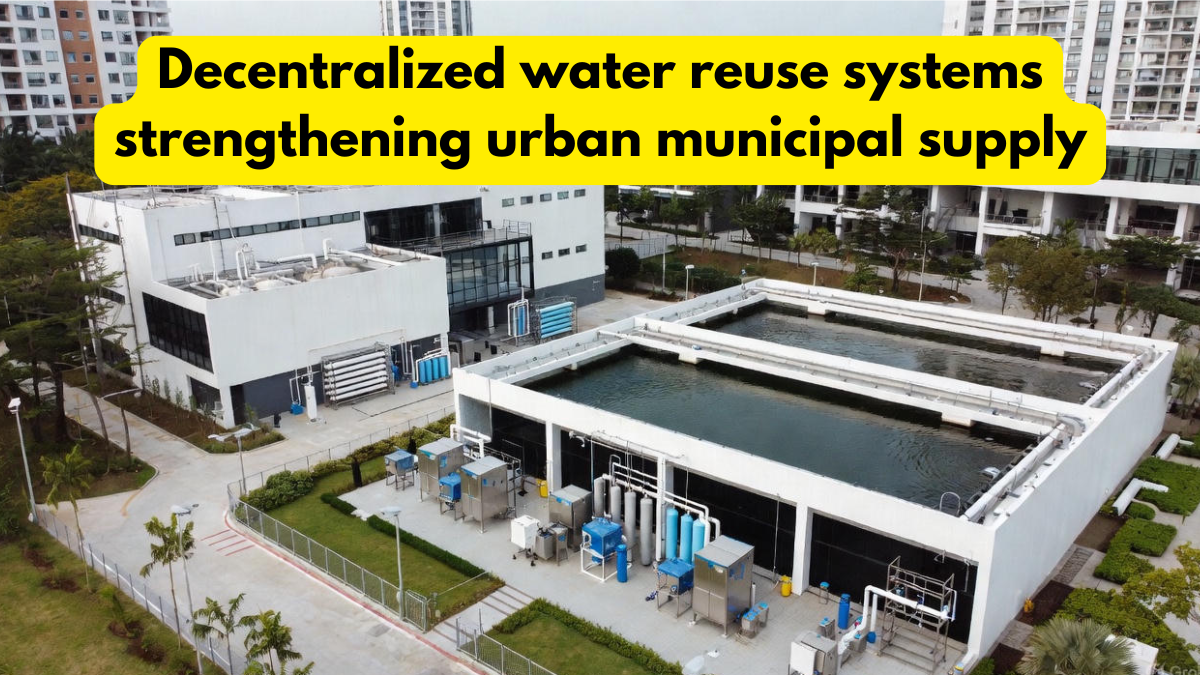
Understanding the Role of Water Reuse in Urban Systems
Municipal water systems historically operate using a linear model in which freshwater is extracted, treated, consumed, and discharged as wastewater. This approach is increasingly unsustainable, especially in regions facing climate-related shortages. Implementing water reuse allows cities to adopt a circular model that maximizes the value of every drop. Instead of discarding wastewater, treatment facilities purify it so it can re-enter the water cycle.
This circular approach is critical for maintaining stable urban supply reserves. As cities grow, local water demand increases, often surpassing the capacity of nearby rivers, reservoirs, and aquifers. Water reuse systems reduce stress on these natural sources by supplementing supply with purified reclaimed water.
Furthermore, water reuse supports sustainability by reducing energy use and minimizing the environmental impacts of wastewater discharge. Treated water used for irrigation or industrial cooling lowers freshwater demands, conserving natural ecosystems and improving urban resilience.
Types of Water Reuse Systems
Cities deploy several types of water reuse systems depending on local regulations, environmental conditions, and infrastructure needs. Decentralized systems are becoming particularly important, as they offer flexibility and modularity for diverse applications.
The table below outlines common types of water reuse systems and their contributions to urban supply and sustainability:
| Type of Water Reuse | Description | Contribution to Urban Sustainability |
|---|---|---|
| Greywater Reuse | Reuses water from sinks, showers, and laundry | Reduces potable water demand in households |
| Blackwater Treatment | Treats all wastewater onsite for reuse | Provides local supply for non-potable applications |
| Industrial Reuse | Recovers water from industrial processes | Lowers freshwater extraction and operational costs |
| Stormwater Harvesting | Collects rainwater for irrigation or recharge | Enhances resilience during dry seasons |
| Potable Reuse | Advanced treatment producing drinkable water | Expands drinking water supply and enhances reliability |
These systems enable municipalities to diversify their water sources, increasing resilience and reducing pressure on natural reserves.
Benefits of Decentralized Water Reuse Systems
The adoption of decentralized water reuse systems improves both environmental outcomes and community resilience. One of the primary advantages is reduced dependence on centralized infrastructure. Smaller treatment units can be installed in residential complexes, commercial districts, or industrial zones, providing localized water supply solutions. This flexibility enhances urban supply stability, particularly during emergencies or peak-demand periods.
Decentralized systems also support sustainability by lowering energy consumption. Transporting water across long distances requires substantial energy, but localized reuse eliminates much of that demand. Additionally, reusing treated water reduces pollution by minimizing wastewater discharge into oceans and rivers.
Another key benefit is economic efficiency. Municipalities can reduce costs associated with expanding large-scale infrastructure by adopting modular reuse technologies. Industries benefit financially as well, as reused water often costs less than purchasing freshwater, making operations more cost-effective and environmentally responsible.
Challenges Hindering Widespread Adoption
Despite their advantages, decentralized water reuse systems face several challenges. Public perception remains a major barrier, particularly concerning potable reuse. Many individuals express discomfort with the idea of consuming treated wastewater, even when scientific data confirms its safety. Overcoming this perception requires strong public education campaigns and transparent communication.
Regulatory frameworks also pose challenges. Many regions lack clear standards for decentralized systems, creating delays in permitting and implementation. Additionally, ensuring water quality consistency across multiple decentralized sites requires robust monitoring systems and technical expertise.
Finally, while decentralized systems can reduce long-term costs, initial installation and technology investment may strain municipal budgets. Ensuring equitable access to reuse systems for low-income communities is essential for fair and sustainable urban development.
The Future of Water Reuse in Sustainable Urban Development
Looking ahead, water reuse will play an increasingly important role in shaping urban infrastructure. Advances in membrane filtration, UV disinfection, and biological treatment are making decentralized systems more efficient, scalable, and cost-effective. Smart monitoring technologies allow real-time quality assessments, enabling cities to manage systems proactively and maintain high safety standards.
Innovative urban planning strategies incorporate reuse systems directly into building codes, green infrastructure, and community design. These integrated approaches strengthen urban supply resilience and support cities in meeting climate adaptation goals. As sustainability becomes a global priority, water reuse will complement broader resource-management strategies, creating healthier, greener, and more resilient municipalities.
The future depends on collaboration among engineers, policymakers, communities, and environmental organizations. By prioritizing sustainability, cities can transform water reuse from an optional practice into a core component of responsible urban development.
Conclusion
Water reuse is a transformative strategy for strengthening municipal water systems in the face of growing demand and climate pressures. By supporting stable urban supply, improving environmental outcomes, and promoting long-term sustainability, decentralized reuse systems offer cities a powerful tool to protect their future. As technology advances and public awareness grows, water reuse will continue to reshape urban planning and serve as a cornerstone of resilient, eco-friendly communities.
FAQ
What is water reuse?
It is the process of treating wastewater so it can be used again for irrigation, industrial processes, or even drinking water.
How does water reuse support urban supply?
It supplements traditional water sources, reduces freshwater demand, and increases resilience during shortages.
Why is water reuse important for sustainability?
It conserves natural resources, reduces wastewater pollution, and lowers energy consumption.
What challenges affect water reuse adoption?
Public perception, regulatory gaps, and initial costs can slow implementation.
Can decentralized water reuse systems improve future infrastructure?
Yes, they offer flexible, scalable, and environmentally responsible solutions for long-term urban resilience.
Click here to learn more