The growing recognition of blue carbon ecosystems has transformed global climate strategies, emphasizing the vital role coastal environments play in capturing and storing atmospheric carbon dioxide. Unlike terrestrial forests, blue-carbon ecosystems—such as mangroves, seagrasses, and salt marshes—sequester carbon at significantly faster rates and store it for millennia in deep sediment layers. As climate change accelerates, governments, researchers, and environmental organizations increasingly view the restoration of coastal ecosystems as a powerful tool for long-term climate mitigation.
These ecosystems not only reduce greenhouse gases but also support biodiversity, protect shorelines, and sustain local communities. However, decades of degradation caused by pollution, urban expansion, and unsustainable development have weakened many coastal habitats. Ecosystem restoration has therefore become critical to reversing ecological damage and strengthening resilience against rising sea levels and extreme weather.
This article explores the science behind blue carbon, the restoration strategies that enhance its climate benefits, and the global importance of coastal conservation. As the world seeks effective solutions to climate change, blue-carbon restoration stands out as a nature-based strategy with far-reaching ecological and societal benefits.
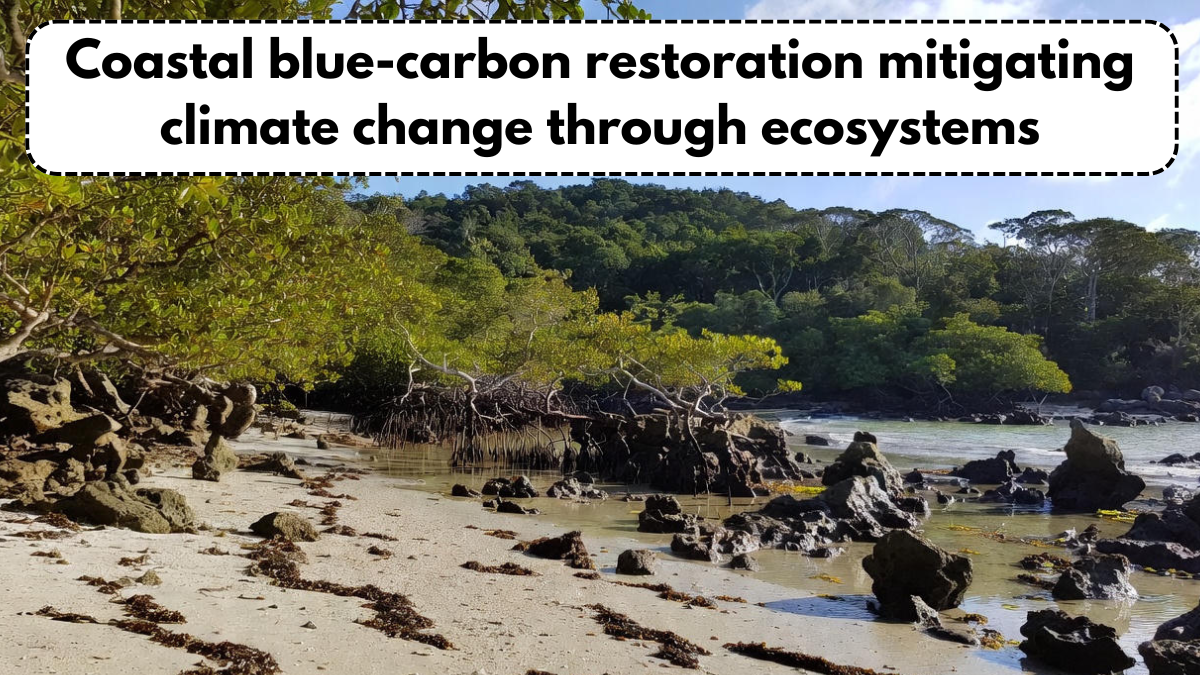
Understanding the Role of Blue Carbon Ecosystems
Blue-carbon ecosystems serve as natural carbon sinks that absorb atmospheric CO₂ and convert it into organic material stored in plant biomass and sediment. Mangroves, seagrasses, and tidal marshes are particularly effective, storing carbon at rates up to ten times higher than terrestrial forests. Because much of this carbon is buried in anaerobic soils, it remains stable for centuries or even thousands of years, making blue-carbon systems essential for enduring climate mitigation.
Yet their ecological role extends far beyond carbon storage. These habitats support fisheries, stabilize coastlines, and filter pollutants, providing critical ecosystem services for communities worldwide. When they are damaged, stored carbon is released back into the atmosphere, contributing to global warming. This makes ecosystem restoration crucial not only to restore ecological balance but also to prevent further carbon emissions from degraded environments.
The expanding scientific understanding of blue carbon underscores its importance in climate policy frameworks, prompting nations to integrate coastal restoration into national adaptation and mitigation plans.
Key Blue-Carbon Ecosystems and Their Climate Contributions
Different types of blue-carbon ecosystems contribute in unique ways to environmental stability, biodiversity, and carbon sequestration. Effective ecosystem restoration strategies depend on understanding the characteristics and ecological functions of each habitat type.
The table below summarizes major blue-carbon ecosystems and their contributions to climate mitigation:
| Blue-Carbon Ecosystem | Characteristics | Contribution to Climate Mitigation |
|---|---|---|
| Mangrove Forests | Located in tropical and subtropical coastal zones | Store large amounts of carbon in biomass and soils; protect coasts from storms |
| Seagrass Meadows | Underwater flowering plants found in shallow marine waters | Capture carbon efficiently; support marine biodiversity and fisheries |
| Salt Marshes | Found in temperate coastal regions | Store carbon in sediment; regulate water quality and serve as wildlife habitat |
| Tidal Flats | Sediment-rich intertidal zones | Enhance coastal resilience; contribute to sediment accumulation and carbon burial |
| Coastal Wetlands | Broad category including marshes and swamps | Support diverse species; buffer sea-level rise and storm surges |
These ecosystems form a natural defense system against climate change, supporting both environmental and human welfare.
Restoration Strategies Supporting Blue-Carbon Recovery
Successful ecosystem restoration involves strategies tailored to local environmental conditions and community needs. Restoration typically includes replanting mangroves, removing invasive species, re-establishing natural water flow, and protecting sensitive marine habitats from further degradation. These actions help ecosystems regain their natural functions and improve carbon-sequestration efficiency.
Community-based restoration is particularly impactful, as local residents often rely on blue-carbon ecosystems for fishing, tourism, and coastal protection. Engaging these communities ensures long-term stewardship and maintains traditional ecological knowledge.
Technological innovations also support restoration efforts. Remote sensing tools, drone mapping, and underwater monitoring systems allow scientists to measure restoration progress, assess carbon storage potential, and identify areas where blue carbon restoration will have the greatest climate impact.
Restoring blue-carbon ecosystems is not only an environmental initiative—it is also an investment in long-term climate mitigation, protecting both nature and human livelihoods.
Benefits Beyond Carbon Sequestration
While carbon storage is central to the value of blue carbon, restored ecosystems provide many co-benefits that strengthen environmental health and social resilience. Coastal habitats protect infrastructure and communities from storm surges, erosion, and flooding. Healthy ecosystems reduce disaster-recovery costs and enhance natural resilience to climate impacts.
Restored ecosystems also support water purification. Seagrasses and marsh plants trap pollutants and sediments, improving water quality and supporting marine biodiversity. This enhances fisheries and ecotourism, providing long-term economic opportunities for coastal communities.
From a social perspective, ecosystem restoration strengthens food security, supports cultural traditions, and promotes environmental education. Combined, these benefits highlight the far-reaching value of blue-carbon systems beyond their climate-sequestration potential.
Challenges to Scaling Blue-Carbon Restoration
Despite its promise, large-scale blue carbon restoration faces significant challenges. Coastal development, pollution, and sea-level rise continue to degrade sensitive ecosystems, making restoration difficult. In some areas, land-use conflicts between conservation, agriculture, and infrastructure development limit restoration efforts.
Financial barriers also impede progress. Many restoration projects require sustained funding over long periods, and not all regions have access to climate-finance mechanisms. Integrating blue-carbon restoration into global carbon markets may help overcome financial gaps, but strong governance and transparent monitoring are essential.
Technical challenges, such as selecting appropriate plant species, ensuring long-term ecosystem stability, and dealing with climate-induced changes, also require expert knowledge. Local communities must be included in planning to ensure restoration aligns with social and economic priorities.
Addressing these challenges will determine the future effectiveness of climate mitigation initiatives involving coastal ecosystems.
The Future of Blue-Carbon Restoration
As scientific understanding deepens, blue carbon will play an increasingly central role in global climate policies. Many countries are now integrating blue-carbon ecosystems into national greenhouse-gas accounting frameworks and carbon-offset markets. Innovations in environmental monitoring will make it easier to track carbon sequestration accurately and verify restoration outcomes.
Future strategies will combine ecosystem restoration with adaptive coastal planning to protect vulnerable regions from sea-level rise. Governments, NGOs, and private-sector stakeholders are expected to collaborate on large-scale restoration projects that deliver long-term climate, ecological, and social benefits.
With its dual potential to mitigate greenhouse gases and enhance ecosystem resilience, blue-carbon restoration represents a powerful tool for achieving sustainable climate futures.
Conclusion
Blue carbon ecosystems offer unmatched potential in the global fight against climate change. By supporting large-scale ecosystem restoration and incorporating these habitats into climate policy, nations can strengthen climate mitigation strategies while enhancing biodiversity, protecting coastlines, and empowering local communities. The future of climate resilience depends on preserving and restoring these vital ecosystems—ensuring their benefits endure for generations to come.
FAQ
What is blue carbon?
It refers to the carbon captured and stored by coastal ecosystems such as mangroves, seagrasses, and salt marshes.
How does ecosystem restoration support blue carbon?
Restoration rebuilds degraded habitats, increasing their capacity to store carbon and provide ecological services.
Why is blue carbon important for climate mitigation?
It sequesters carbon long-term and protects coastlines, offering nature-based solutions for climate challenges.
What threatens blue-carbon ecosystems?
Pollution, development, sea-level rise, and habitat destruction are major threats.
Can blue-carbon restoration benefit communities?
Yes, it enhances fisheries, tourism, water quality, and coastal protection, supporting economic and social resilience.
Click here to learn more